
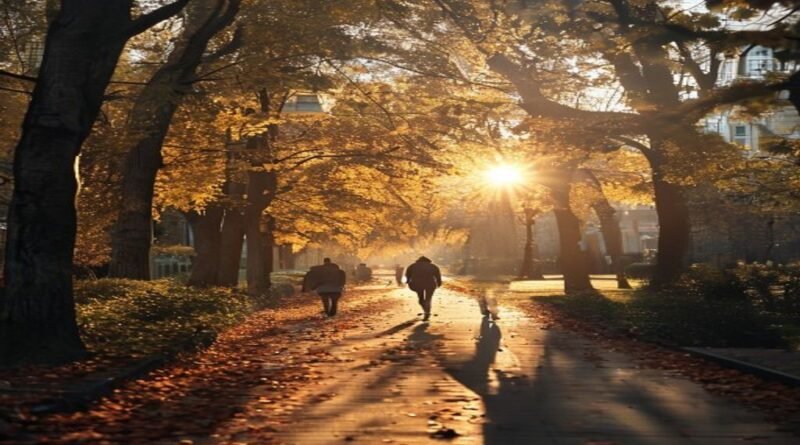
The Quiet Power of Walking: The World’s Most Underrated Exercise
In a world that sells fitness as something to be bought, downloaded or subscribed to, the most powerful exercise available to human beings costs nothing at all. It needs no equipment, no membership and no instruction. Almost everyone already knows how to do it, and most of us do far too little of it. Walking, the plainest of all movements, may be the most underrated tool for health that humanity possesses.
Built for the Journey
Human beings are, in a very literal sense, made to walk. Our bodies evolved over vast stretches of time to move steadily across landscapes, and that heritage is written into our bones, muscles and hearts. When we walk, we are not performing an unnatural feat but returning to the activity for which we were designed. This is part of why it feels so accessible: the body already knows what to do.
Modern life, however, has quietly engineered walking out of daily existence. We are ferried from place to place, seated for hours at a stretch, and surrounded by conveniences that spare us the smallest effort. The result is that many people now move less in a week than their ancestors did in a morning. Reclaiming the walk is, in a sense, an act of restoration, giving the body back a rhythm it has been denied.
Small Steps, Wide Benefits
The virtues of regular walking are broad and quietly profound. Moving on foot supports the heart, helps regulate the body’s systems, and keeps joints and muscles supple in ways that sitting never can. Because it is gentle, it can be sustained day after day, year after year, without the wear that harder pursuits sometimes bring. Consistency, not intensity, is where its power lies.
Just as striking are its effects on the mind. A walk has a way of untangling thoughts, easing tension and lifting mood. Many people find that a problem which felt insurmountable at a desk resolves itself somewhere along a quiet path. There is something about the steady rhythm of footfall, combined with a change of scene, that loosens the grip of worry and lets the mind breathe.
The genius of walking is its modesty. It asks almost nothing of us, and in return it gives back the body, clears the mind and opens the world.
A Habit the Whole World Shares
Unlike many forms of exercise, walking belongs to no particular culture, class or age. It is practised on every continent and in every kind of place, from crowded city pavements to mountain trails to quiet village lanes. In some societies, the evening stroll is a cherished social ritual, a time to greet neighbours and let the day wind down. In others, walking is woven so deeply into daily errands that it is barely noticed as exercise at all. These traditions hint at a truth worth reclaiming: that movement need not be a separate task but a natural thread running through ordinary life.
This universality is part of walking’s quiet appeal. It levels distinctions and welcomes everyone. A person recovering from illness and a seasoned athlete can both benefit, each at their own pace. There is no failure in walking slowly, no shame in a short distance. The only real mistake is not to walk at all.
Weaving It Back Into Life
The practical genius of walking is how easily it folds into an existing day. It does not demand a dedicated hour or a change of clothes. A short walk after a meal, a decision to travel a familiar journey on foot, a habit of pacing during a phone call, a deliberate detour through a park, these small choices accumulate into something significant. The distance covered matters less than the decision, repeated often, to move rather than to sit.
Walking also opens the world in a way that faster travel cannot. On foot, a neighbourhood reveals its details: the texture of buildings, the change of seasons, the small dramas of street life. Travellers often say they never truly know a place until they have walked it. The same is true of home. To walk one’s own streets regularly is to grow intimate with a world that a hurried life reduces to a blur.
There is a temptation, in an age of gadgets and grand fitness promises, to assume that anything so simple cannot be worth much. That assumption is precisely backwards. The very simplicity of walking is its strength, because it removes every barrier and excuse. No skill must be learned, no cost incurred, no permission granted. One need only stand up and step outside.
In the end, the case for walking is almost embarrassingly straightforward. It is good for the body, kind to the mind, open to everyone and free for the taking. The most underrated exercise in the world is waiting just beyond the door, and the only thing required to begin is the willingness to take the first step.
