
The World on Wheels: How Formula 1 Became a Truly Global Spectacle
There was a time when top-level motor racing was, at heart, a European affair. Its great circuits threaded through the forests, hills and old towns of a single continent, and its audience, though passionate, was relatively contained. That world is gone. Today the sport arrives like a travelling carnival in the deserts of the Middle East, the harbours of Asia, the boulevards of the Americas and the historic tracks of its birthplace, drawing an audience that spans the entire planet. Formula 1 has become one of the most genuinely global spectacles in all of sport.
A Calendar That Circles the Earth
The most visible sign of this transformation is the shape of the season itself. Where the sport once clustered its races in a familiar band of countries, it now stitches together a route that touches nearly every region of the world. Each stop is more than a race. It is a showcase for its host, a chance for a city or nation to present itself to a watching global audience through the glamour of speed.
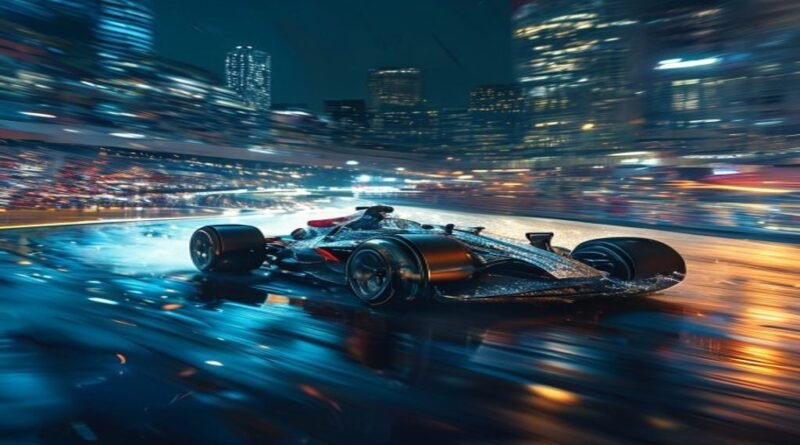
Night races beneath floodlights, street circuits winding past illuminated landmarks and purpose-built arenas rising from the desert have turned individual events into destinations. The racing is the core, but around it has grown a festival of music, hospitality and spectacle designed to draw in people who might never have considered themselves motorsport fans. The result is an event that sells not just competition but an entire glamorous experience.
The Storytelling Revolution
For all the exotic venues, the sport’s deepest breakthrough has been in how it tells its own story. For a long time, motor racing presented itself as a technical, somewhat austere pursuit, easier to admire than to love unless you already understood it. That changed when the sport threw open its doors and let audiences behind the scenes, revealing the rivalries, the pressures and the personalities that animate the paddock.
By turning drivers and teams into characters in an unfolding drama, the sport gave newcomers a reason to care before they understood a single rule. Suddenly the appeal was not only the machinery but the human theatre: ambition, tension, triumph and heartbreak played out over a long season. This narrative approach proved especially powerful with younger audiences and in markets with no racing heritage, who came for the story and stayed for the sport.
Speed alone never conquered the world. Formula 1 went global when it learned to sell not just the cars, but the people driving them and the drama between them.
Engineering as Spectacle
Beneath the glamour lies a genuine marvel that helps explain the fascination: these are among the most sophisticated machines humanity builds for sport. The blend of aerodynamics, materials science and split-second strategy represents a continual contest of ingenuity, and part of the sport’s appeal is watching the limits of the possible be nudged forward season after season.
This technological drama gives the sport a dual identity. It is at once a human contest between daring individuals and a proving ground for engineering ambition. Fans can engage on whichever level speaks to them, whether they thrill to a bold overtake or marvel at the invisible calculations that decide a race. That breadth of appeal has helped the sport reach audiences who arrive with very different tastes.
The Digital Grandstand
The final piece of the global puzzle has been the screen. Streaming and social media have dissolved the old limits of geography, letting fans anywhere follow every session and consume an endless stream of highlights, explainers and behind-the-scenes glimpses. Short, shareable clips have introduced the sport to millions who would never have sought out a full race, and interactive digital experiences have deepened the involvement of those already hooked.
This connectivity has also created a new kind of fan: one who follows drivers as personalities across their social feeds, engages with the sport daily rather than only on race weekends, and feels part of a worldwide community rather than an isolated enthusiast. The grandstand, in effect, has gone global and become permanent.
The expansion is not without friction. A relentless travelling schedule raises hard questions about its footprint and its toll on those who make it happen, and some longtime supporters worry that the pursuit of new markets risks diluting the traditions that gave the sport its soul. Balancing heritage against ambition will be a defining challenge in the years ahead.
Yet the transformation is undeniable. What was once a specialist passion confined to a corner of the world has become a shimmering global roadshow, equal parts sport, entertainment and travelling festival. Formula 1 no longer waits for the world to come to it. Season after season, it takes the spectacle to the world, and the world, in ever greater numbers, turns out to watch.
