
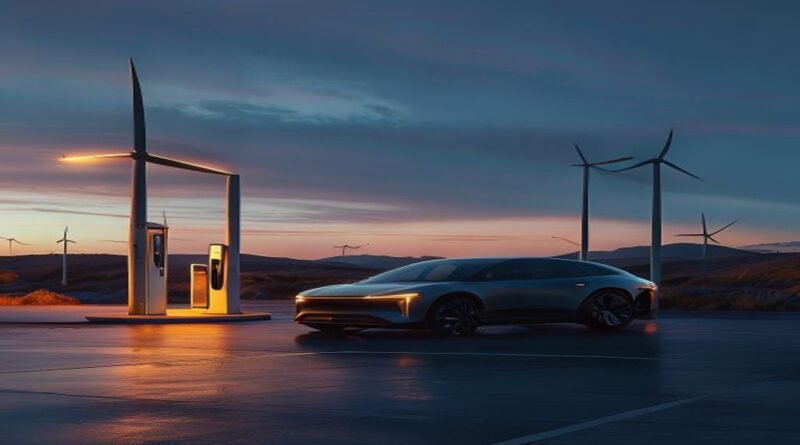
Charged Up: Electric Vehicles and the World’s Great Energy Transition
The automobile has defined the modern world for more than a century, shaping cities, economies, and the very landscapes we live in. It is now undergoing its most profound change since the horse gave way to the engine. The transition from combustion to electric power is often framed as a story about cars, but that framing misses its true scale. What is happening is a rewiring of the entire relationship between transport and energy, and it is unfolding at different speeds all over the world.
More Than a New Engine
An electric vehicle is deceptively simple compared with its combustion ancestor. It has far fewer moving parts, requires less maintenance, and converts energy to motion with striking efficiency. But its simplicity at the wheel conceals enormous complexity upstream. The battery at its heart depends on minerals dug from a handful of countries, refined in fewer still, and assembled in vast factories that represent some of the largest industrial investments ever made.
This is why the shift matters far beyond the driveway. A world that runs on electricity rather than liquid fuel is a world with different geography of power. The nations that once mattered because they sat atop oil reserves now compete with those that control lithium, cobalt, nickel, and the expertise to turn them into cells. The map of energy advantage is being redrawn.
A Transition at Many Speeds
No single global story captures the pace of change, because it varies dramatically by region. Some countries have embraced electrification with remarkable speed, driven by dense cities, supportive policy, and strong domestic manufacturing. In others, adoption remains a niche pursuit, held back by cost, sparse charging infrastructure, or unreliable electricity supply.
Several forces shape how quickly a country moves.
- The state of the grid. Electric transport is only as clean and reliable as the power behind it, and many grids need major upgrades to cope.
- Urban density. Compact cities with short trips suit electric vehicles far better than sprawling regions with long distances between towns.
- Industrial ambition. Governments that see batteries and vehicles as engines of future employment tend to push hardest.
- Affordability. Until the total cost of ownership falls below that of combustion, mass adoption remains out of reach for most households.
The result is a patchwork planet, where the future arrives unevenly and the very meaning of a normal car differs from one place to the next.
The Battery Question
Everything hinges on the battery, and the battery raises hard questions. Extracting the minerals it needs can strain water supplies, disturb fragile ecosystems, and depend on labor practices that draw sharp criticism. Concentrating production in a few regions creates dependencies that unsettle governments wary of relying on rivals for a strategic good.
The clean car and the dirty mine are two ends of the same supply chain, and the transition will be judged partly by how honestly the world confronts that tension.
Progress is real, however. Researchers and manufacturers are working to reduce reliance on the scarcest materials, extend battery life, and build recycling systems that could eventually turn old cells into new ones. If those efforts succeed, the pressure on mines could ease over time, and the early environmental costs of the transition could be partly recovered.
Cities Reimagined
The quietest revolution may be sensory. Streets that have roared and fumed for generations are beginning to fall silent as electric buses, scooters, and cars replace their combustion predecessors. The absence of exhaust changes the air in crowded cities where pollution has long shortened lives. The absence of engine noise changes the very feeling of urban space.
This shift dovetails with broader rethinking of how cities move. Planners increasingly treat electric vehicles as one piece of a larger puzzle that includes public transit, cycling, and shared mobility. The goal, at its most ambitious, is not simply to swap one kind of car for another but to reduce dependence on private vehicles altogether.
The Long Road
For all the momentum, the transition remains far from complete, and it is not inevitable. The global fleet still runs overwhelmingly on liquid fuel, and turning over hundreds of millions of vehicles takes decades. Charging networks must expand enormously. Grids must be strengthened to bear the load. And the benefits must be shared widely enough that the change does not become a privilege of the wealthy.
Yet the direction is unmistakable. The economics increasingly favor electricity, the technology keeps improving, and public expectations are shifting. The world is not merely changing its cars. It is changing the foundation on which movement itself is built, and in doing so, quietly reshaping the balance of the global economy for the century ahead.
