
Less, But Better: The Global Appeal of Minimalism and Decluttering
Somewhere along the way, the modern world became very good at accumulation. Homes swelled with possessions, closets overflowed, and drawers filled with objects whose purpose no one could quite recall. And then, quietly and across many cultures at once, a countercurrent began to form. A growing number of people started asking a subversive question: what if the path to a better life lay not in having more, but in wanting less? The appeal of minimalism, it turns out, is genuinely global.
An Old Idea in New Clothes
Though it can feel like a modern trend, the impulse toward simplicity is ancient. Many of the world’s philosophical and spiritual traditions have long taught that attachment to possessions is a source of unease, and that contentment is more reliably found in sufficiency than in abundance. Various cultures have cultivated aesthetics of restraint, prizing empty space, natural materials and the beauty of the essential over ornament and excess.
What is new is the context. The contemporary embrace of minimalism is, in large part, a response to a world that constantly urges us to consume. Surrounded by ceaseless invitations to buy, upgrade and acquire, many people have found themselves drowning in things and yearning for relief. The movement toward less is, at heart, a reaction against a culture of more.
The Weight of Our Possessions
Those who pare down often speak of a surprising discovery: that possessions carry a psychological weight far heavier than their physical mass. Every object owned demands a small measure of attention, whether to store it, maintain it, or simply hold it in mind. Multiplied across a cluttered home, these tiny burdens accumulate into a low, persistent hum of stress that many people fail to notice until it lifts.
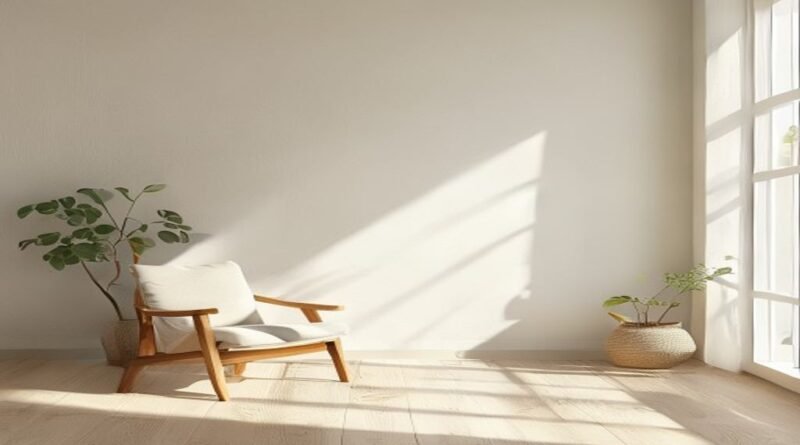
Clearing that clutter can feel disproportionately liberating. A tidy, open space seems to quiet the mind as well as the room. People describe feeling lighter, calmer and more able to focus once the excess is gone. The benefit is not merely aesthetic. It reflects a genuine easing of the mental load that our belongings quietly impose.
Minimalism is not about deprivation. It is about clearing away the trivial so that room remains for what genuinely matters.
Choosing What Deserves a Place
At its best, minimalism is not a competition to own as little as possible. It is a practice of intention, of deciding deliberately what earns a place in one’s life rather than letting possessions accumulate by default. The question shifts from whether something might one day be useful to whether it genuinely adds value now. Objects that pass the test are kept and appreciated; those that do not are released without guilt.
This deliberate approach extends naturally beyond physical objects. Many who begin by decluttering their homes find themselves applying the same lens to their schedules, their commitments and their digital lives. The same question, does this deserve my time and attention, proves as clarifying for a crowded calendar as for a crowded cupboard. In this way, minimalism becomes less a style of decoration than a philosophy of living well.
A Movement With Many Faces
Part of what makes the appeal so broad is its flexibility. Minimalism looks different in different lives and cultures. For some it means a stark, uncluttered home; for others simply a lighter, more intentional relationship with their belongings. There is no single correct expression, and that openness has allowed the idea to take root across wildly varied circumstances.
There are practical and ethical dimensions, too. In a time of growing awareness about consumption and its costs, choosing to buy less and keep things longer resonates with a desire to live more responsibly. Owning fewer, better things can mean less waste and a smaller footprint, aligning personal contentment with a broader sense of care for the world. For many, this convergence of the personal and the ethical is a large part of the appeal.
None of this requires a dramatic renunciation. The beauty of the movement is that it can begin small, with a single drawer, a single shelf, a single honest question about what one truly needs. From that modest start, many people find a momentum that gradually reshapes how they live.
In the end, the global rise of minimalism reflects a simple, widely shared intuition: that a life crowded with possessions is not the same as a life that is full. Across continents and cultures, people are rediscovering that clearing space, in their homes and in their days, makes room for the things that money cannot buy. Less, they are finding, can indeed be better.
