
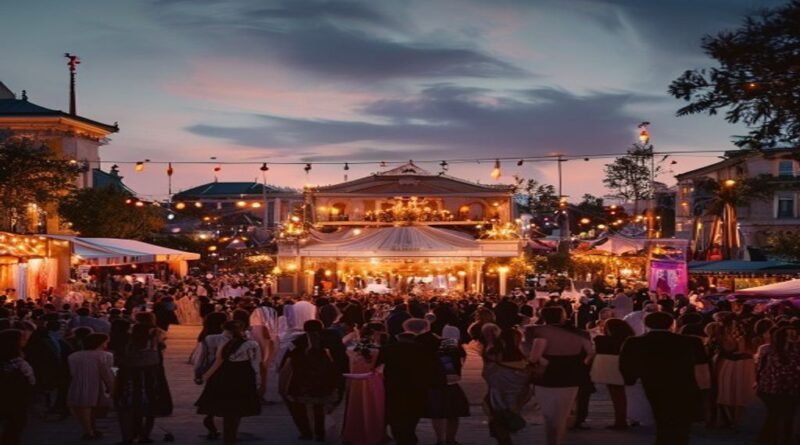
Where the World Gathers: Inside the Great Film and Arts Festivals
For a few charged days each year, an ordinary city becomes the center of the cultural universe. Streets fill with filmmakers, critics, buyers, and fans; theaters run from morning to midnight; and the fate of films, careers, and reputations hangs on the reaction of a crowd in the dark. The great festivals of the world are among the last places where culture still gathers physically, in one location, to celebrate, judge, and do business all at once.
More Than a Red Carpet
To the outside world, a major festival looks like a parade of glamour: stars on the red carpet, flashing cameras, and lavish parties. That spectacle is real, but it is the surface of something far more consequential. Beneath the glamour lies a working marketplace where films are bought and sold, distribution deals are struck, and the year’s cultural conversation begins to take shape.
A festival premiere can transform a small film’s prospects overnight. A rapturous reception generates the buzz that draws distributors and audiences; a cold one can bury a project that took years to make. For filmmakers from outside the major industries especially, a festival slot is often the single best chance to reach the wider world. The stakes are enormous, and everyone in the room knows it.
The Great Gatherings
The festival calendar spans the globe, and each major event has its own character and purpose.
- Some are famous for their prestige, their prizes carrying an artistic authority that can define a career.
- Others are known as markets, where the business of film is conducted as intensely as the celebration of it.
- Some champion discovery, dedicating themselves to independent voices and first-time filmmakers.
- Still others focus on particular regions or forms, giving a platform to work that the biggest festivals overlook.
Together they form an ecosystem. A film might premiere at a prestigious European festival, travel to a North American showcase to build momentum, and then tour smaller events around the world, gathering audiences and acclaim at each stop. This circuit is how much of the world’s most ambitious cinema finds its way to viewers.
Curators of Culture
Behind every festival stands the quiet, powerful work of selection. Programmers sift through thousands of submissions to assemble the lineup, and their choices carry real weight. To include a film is to declare it worthy of attention; to exclude it is often to consign it to obscurity. In this sense, festivals are not neutral stages but active shapers of taste, deciding which stories and which voices the wider culture will hear.
A festival’s program is an argument about what matters in art right now, made not in words but in the films it chooses to show.
This power invites scrutiny. Festivals face persistent questions about whose work they champion and whose they overlook, about the balance between commercial appeal and artistic risk, and about whether their gates open wide enough to genuinely diverse voices. The best of them treat these questions seriously, using their influence to spotlight talent that the market alone would ignore.
The Human Element
In an age when almost everything can be experienced through a screen, festivals persist because they offer something screens cannot: presence. There is a particular magic in watching a film for the first time in a packed theater, surrounded by strangers reacting in real time, with the people who made it sitting nearby. That shared, irreplaceable experience is the beating heart of every festival.
Beyond film, arts festivals of every kind, from theater and music to literature and visual art, offer the same gift. They create temporary communities where creators and audiences meet face to face, where ideas are debated in person, and where the accidental encounter, the overheard conversation, and the chance collaboration can change the course of a career or an art form.
Enduring in a Digital Age
The rise of streaming and online distribution once seemed to threaten the festival model. Why gather in one city, the argument went, when films could reach everyone instantly from home? Yet festivals have not faded. If anything, they have grown more important as anchors of prestige and attention in an ocean of endless content, offering the human scale and shared excitement that abundance alone cannot provide.
The world’s great festivals endure because they answer a deep need: to gather, to celebrate, and to decide together what is worth our attention. They are where culture pauses to look at itself, in the company of others, in the flickering light of a shared screen. As long as art matters to people, they will keep coming, from every corner of the world, to the places where the world gathers.
