
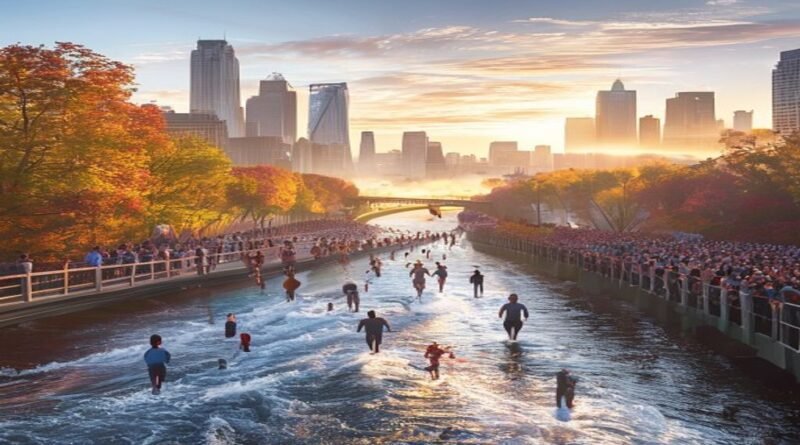
The Long Road Home: The Culture of the World’s Great Marathon Majors
On a handful of mornings each year, certain great cities of the world surrender their streets. Traffic vanishes, barriers go up, and for a few hours the roads belong not to machines but to a vast, shuffling, striving river of humanity. The world’s most celebrated marathons are among the largest participatory sporting events on Earth, and yet their true significance lies less in speed than in what they reveal about community, endurance and the human need to test one’s own limits.
More Than a Race
To watch one of the great city marathons is to understand quickly that the elite athletes at the front, extraordinary as they are, represent only a sliver of the story. Behind them stretches an ocean of ordinary people: first-timers and veterans, the young and the old, the fast and the resolutely slow. They run in memory of loved ones, in defiance of illness, in pursuit of a personal milestone or simply to prove to themselves that they can. The marathon is one of the rare arenas where amateurs share the same course, on the same day, as the finest in the world.
This blend of the elite and the everyday gives these events their distinctive character. A single road holds both the pursuit of a world-class time and the quiet heroism of someone finishing hours later on sheer willpower. Both are honoured. The last runner across the line is often cheered as loudly as the first, because everyone watching understands that finishing at all is its own kind of victory.
A Festival for the Whole City
The great marathons are also, unmistakably, civic celebrations. Along the route, neighbourhoods turn out to claim their stretch of road, and the day takes on the atmosphere of a street party. Bands play, families hoist homemade signs, strangers press cups of water and words of encouragement on runners they will never see again. For a few hours the ordinary reserve of city life dissolves into open, uncomplicated goodwill.
Each of the world’s storied marathons carries its own local flavour, shaped by the streets it winds through and the traditions that surround it. Runners speak of the roar of a particular crowd, the challenge of a notorious hill, the emotional charge of a famous finishing straight. These signatures turn each race into a distinct experience and give the wider community of runners a shared vocabulary of places they dream of one day reaching.
The marathon is a rare democracy of effort, where the champion and the charity runner suffer on the same road and are cheered by the same voices.
The Pilgrimage of the Six Stars
For a growing global tribe of dedicated amateurs, the greatest marathons have become the objects of a lifelong quest. To complete the full set of the world’s most prestigious city races is a badge of honour that runners pursue over many years, travelling across continents to tick off each one. The ambition turns running into a form of pilgrimage, blending athletic challenge with the joy of discovering new cities on foot.
This international dimension is part of the appeal. A runner might train through the cold, dark months at home for the reward of a race in a distant metropolis, experiencing a foreign city not from a tour bus but from within its living streets, propelled by the cheers of strangers. Few forms of travel offer such intimacy with a place, or such a powerful sense of shared purpose with people from every corner of the world.
Why We Keep Running
At the centre of all this lies a simple, ancient act. To run a marathon is to voluntarily embrace difficulty, to invite exhaustion and pain in exchange for the knowledge that one endured. In an age of comfort and convenience, that deliberate hardship holds a strange and growing appeal. The distance cannot be faked or bought. It must be earned, step by step, by anyone who attempts it.
The training alone reshapes lives. Months of early mornings and long, solitary miles teach discipline, patience and a quiet confidence that spills into everything else. Many runners describe the marathon less as an event than as a transformation, a process that changes how they see themselves long before they reach the start line.
That is the deeper meaning of the world’s great marathons. They are not merely races but festivals of ordinary courage, staged in the heart of the world’s cities and open to almost anyone willing to try. On those special mornings, a shared understanding settles over the crowds and the runners alike: that the long road, however hard, is one worth travelling, and that the finish line is a place where the whole of humanity, for once, is on the same side.
